Yes, You Can Sell It. Here's What It Pays.
The permission question has a short answer: on a paid plan, yes. The more useful question is what selling AI music actually returns, and that depends entirely on which channel you use — the gap between streaming and direct sales is not a few percent, it is orders of magnitude. Here are the five routes, with honest numbers.
The short version
Five things before you monetise a single track.
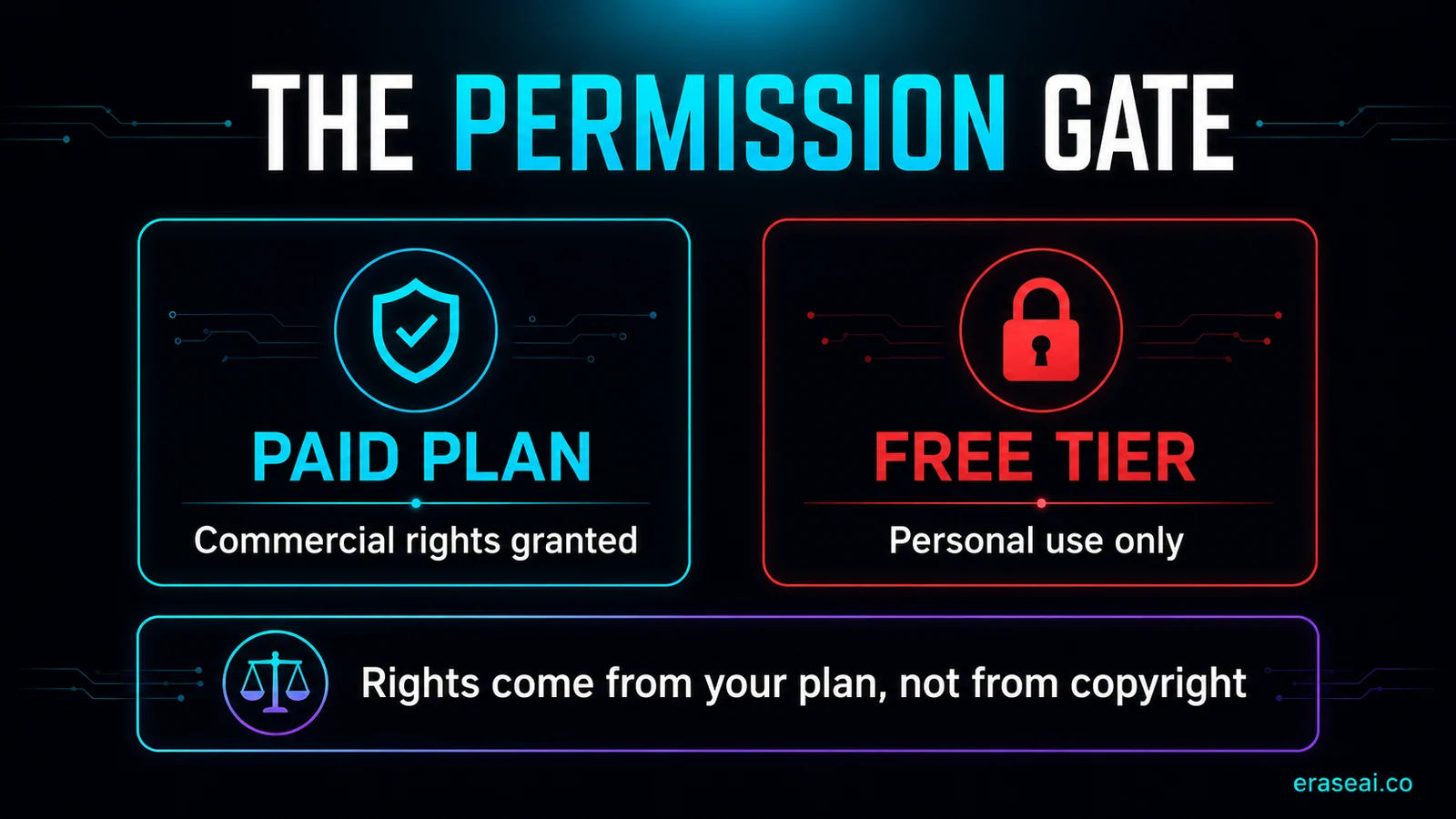
Commercial rights come from your generator plan, not from copyright. Paid Suno and Udio tiers grant them; free tiers generally do not.
Streaming is the worst-paying channel per unit and the most competitive — fractions of a cent per play, with a minimum stream threshold before a track earns anything.
Direct-to-fan sales and licensing return real money per transaction, but require an audience or a buyer rather than just an upload.
Volume without engagement reads as spam to platforms. A catalog people listen to is treated very differently from hundreds of near-identical uploads.
Most lost revenue is not legal — it is tracks that never stayed live, because raw exports fail automated screening.
Your plan decides what you may sell
Check this before anything else — it is the one hard gate.
The right to sell what a generator produces comes from that generator's terms of service, and it is almost always tied to your subscription tier. Suno and Udio grant commercial use of your output on paid plans. Free tiers typically limit you to personal, non-commercial use — which means tracks made on a free account are not yours to distribute, however good they sound.
Two details catch people out. First, rights are often tied to maintaining the plan, so cancelling can affect what you may continue to do with material generated under it. Second, these terms are revised, and the version that applied when you generated a track may not be the version that applies now. Read the current terms for your actual plan before building a release or a business on top of them.
Worth repeating because it is the most misunderstood point in this whole area: this permission is contractual and is not the same as owning a copyright. You may be fully entitled to sell a track while having no enforceable copyright in the generated audio. Our AI music copyright guide explains why, and which parts of your track you can actually own.
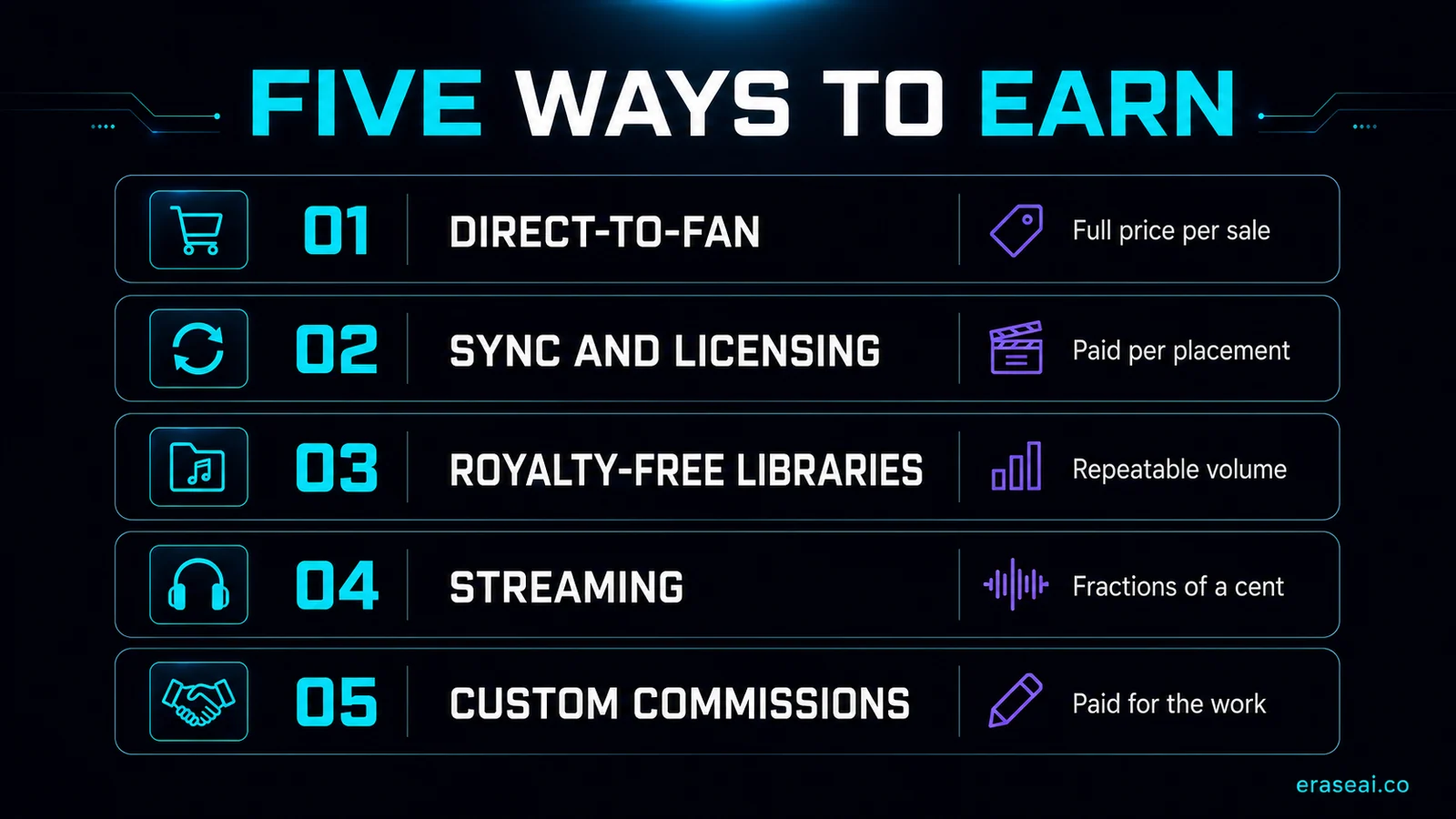
Five ways to earn, ranked by what they pay
Same catalog, wildly different returns depending on the route.
Direct-to-fan sales
Selling a track or album straight to listeners returns the full price rather than a fraction of a cent. A storefront like played.fm keeps the margin and the customer relationship. Needs an audience, however small — but ten real buyers beat ten thousand passive streams.
Sync & licensing
Placing music in video, games, ads, or podcasts pays per use and can pay well. AI catalogs are competitive here precisely because buyers want cheap, clearable, unbranded music. The work is in reaching buyers and having clean paperwork.
Royalty-free / stock libraries
Licensing to content creators through marketplaces is a volume business with modest per-sale returns, but it is repeatable and does not require you to build a fanbase. Check each marketplace's AI policy — they differ sharply.
Streaming royalties
The default assumption and the weakest per-unit payer: fractions of a cent per play, plus a minimum stream threshold before a track earns at all. Worth doing for reach and discovery; a poor primary income plan from a standing start.
Custom commissions
Making bespoke tracks for clients — intro music, background beds, personalised songs. Generators make turnaround fast enough to be profitable at modest prices, and you are paid for the work rather than hoping for plays.
What a cold-start catalog really earns
The part the income-course crowd leaves out.
A controlled experiment we cover in our watermark guide put fifty AI-generated tracks through a distributor to five major platforms, from a genuine cold start with no existing audience, and tracked three months of streaming data. The result was coffee money — not a salary, not side-hustle income. Per-stream rates in fractions of a cent do not produce meaningful revenue without either volume or an audience, and a new catalog has neither.
Two honest caveats in both directions. Earnings do compound: tracks pick up playlist placements, streams accumulate, and month three outperformed month one. And the experiment measured streaming only — the channels higher up the list pay far better per transaction, which is exactly why treating streaming as the whole plan is the most common strategic mistake here.
The other finding from that test is the one with the most direct financial consequence: in the same batch, raw uploads were muted or pulled within two weeks while properly prepared tracks stayed live across all five platforms. A track that is not live earns exactly nothing, which makes release preparation a revenue question rather than a technical one.
Four things to get right first
Each one prevents a specific way that revenue disappears.
Confirm commercial rights
Check the current terms for the exact plan you generated on. This is the one genuine permission gate, and getting it wrong undermines everything downstream.
Prepare the file
Strip embedded identifiers and master to platform loudness spec. We recommend Undetectr, which does both in a single pass — a track that fails screening earns nothing.
Disclose AI involvement
Fill in your distributor's AI metadata fields. Undisclosed AI content is specifically enforced against, and disclosure costs you nothing commercially.
Pick channels deliberately
Decide whether you are building for streaming reach, direct sales margin, or licensing volume. They need different catalogs and different amounts of work.
Selling AI music FAQ
Can you sell AI-generated music?
Yes, if your generator plan grants commercial rights to the output. Suno and Udio both provide commercial use on paid tiers, which covers distributing to streaming services, selling directly, and licensing. Free tiers typically do not — they are usually limited to personal, non-commercial use, and that is the single most common reason people find themselves selling music they were never licensed to sell.
Can you make money selling AI music?
Some, slowly, with volume. Streaming pays fractions of a cent per play and requires tracks to clear a minimum stream threshold before earning at all, so a new catalog with no audience earns very little in its first months. Direct sales and licensing pay far better per transaction but need an audience or a buyer. Anyone promising fast income from a standing start is selling you something.
Do I own AI-generated music that I sell?
You hold contractual permission to exploit it, which is not the same as owning a copyright in it. Purely machine-generated audio generally fails the human-authorship requirement, so there may be no copyright for you to enforce even while you are perfectly entitled to sell the track. Our AI music copyright guide covers this distinction in detail.
Can you sell AI music on Spotify?
Yes, through a distributor, provided you hold commercial rights and the audio passes screening. Spotify does not prohibit AI-assisted music as a category. The practical obstacles are the distributor's automated checks and the platform's minimum stream threshold for royalties, not permission.
Is royalty-free AI music a better business than streaming?
Often, per transaction. Licensing tracks to content creators, or selling directly to listeners, returns real money per sale rather than fractions of a cent per play. It is also more work: you need a storefront or marketplace presence and something that distinguishes your catalog. Most people who earn meaningfully from AI music combine several channels rather than relying on streaming alone.
How much AI music can I upload before it counts as spam?
There is no published number, and chasing one is the wrong instinct. Platforms enforce against mass-produced uploads designed to farm payouts, and the signals are volume combined with low engagement and repetitive material. A steady catalog of tracks people actually listen to is treated very differently from hundreds of near-identical uploads released in a week.
What should I do before selling a track?
Confirm your plan grants commercial rights, prepare the file so it passes distributor screening, and disclose AI involvement in your metadata. Those three steps address the reasons releases get rejected, pulled, or challenged after the fact.
A track that isn't live earns nothing.
Rights sorted and the file properly prepared — then pick the channel that actually pays for the catalog you are building.
▸ Independent · We recommend Undetectr